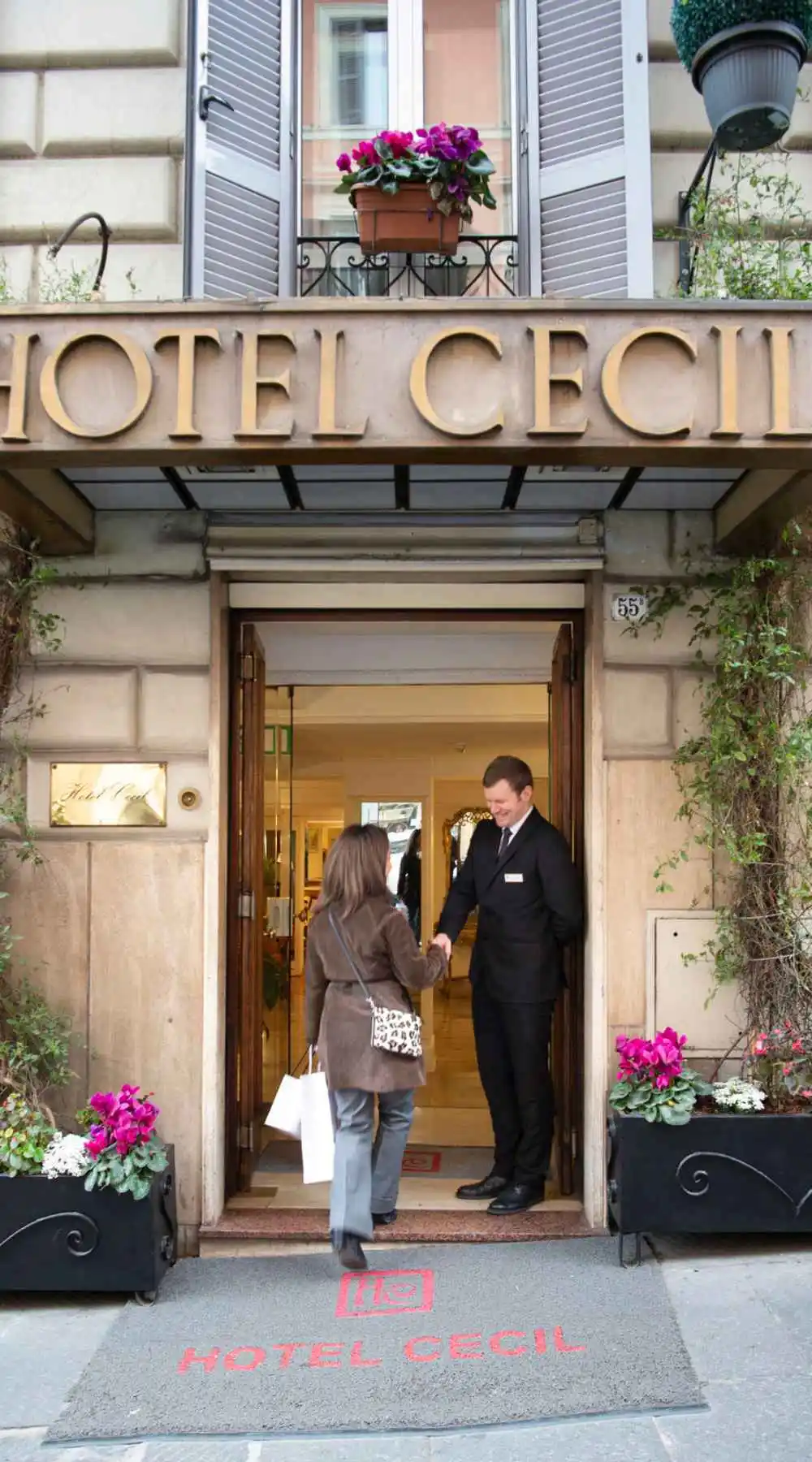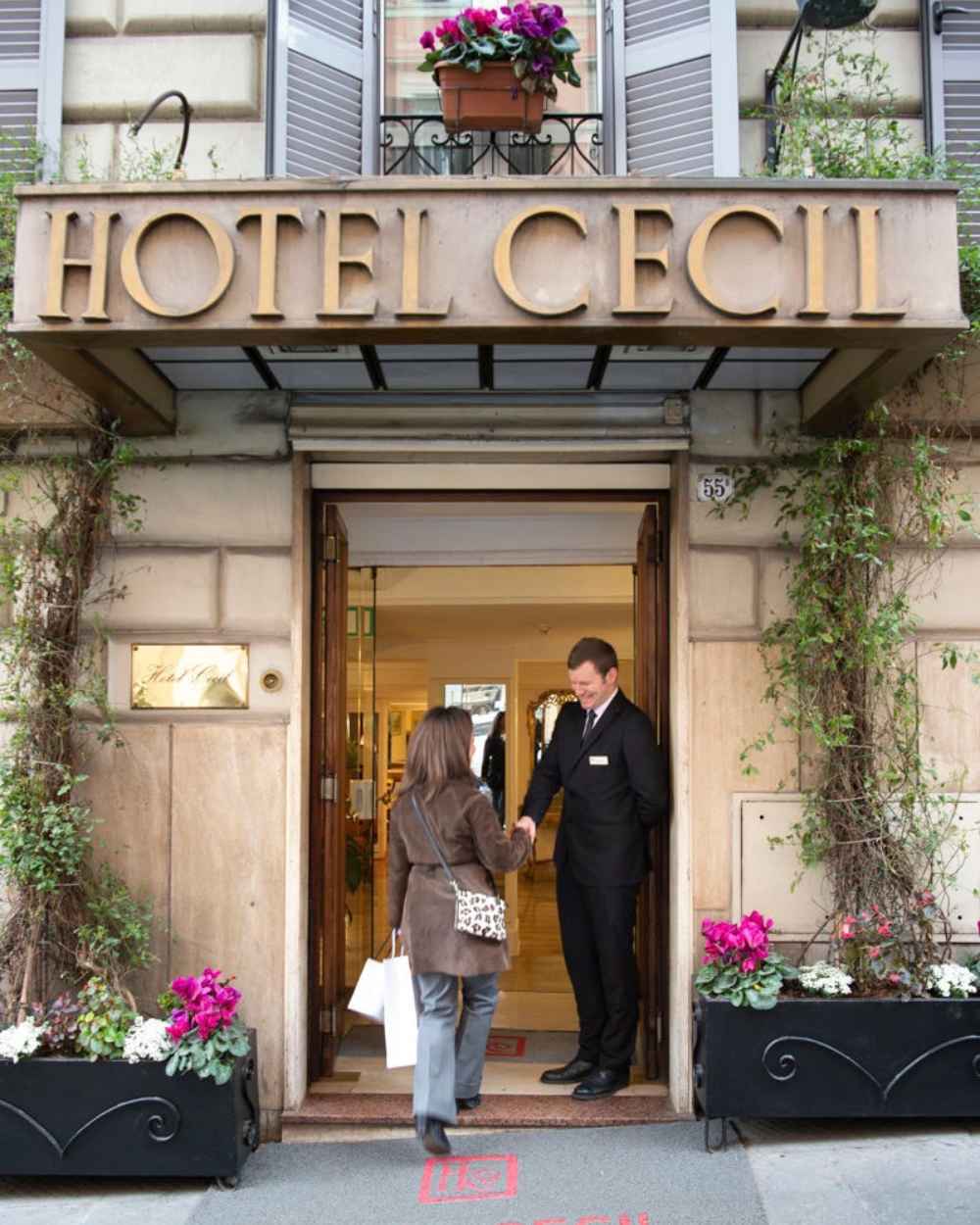
The Spanish Steps, the staircase of Trinità dei Monti, were built between 1723 and 1726. For those staying on Via Francesco Crispi, they are the first sight of the day: leave the hotel and four minutes later you are here.
How to get there from the Cecil
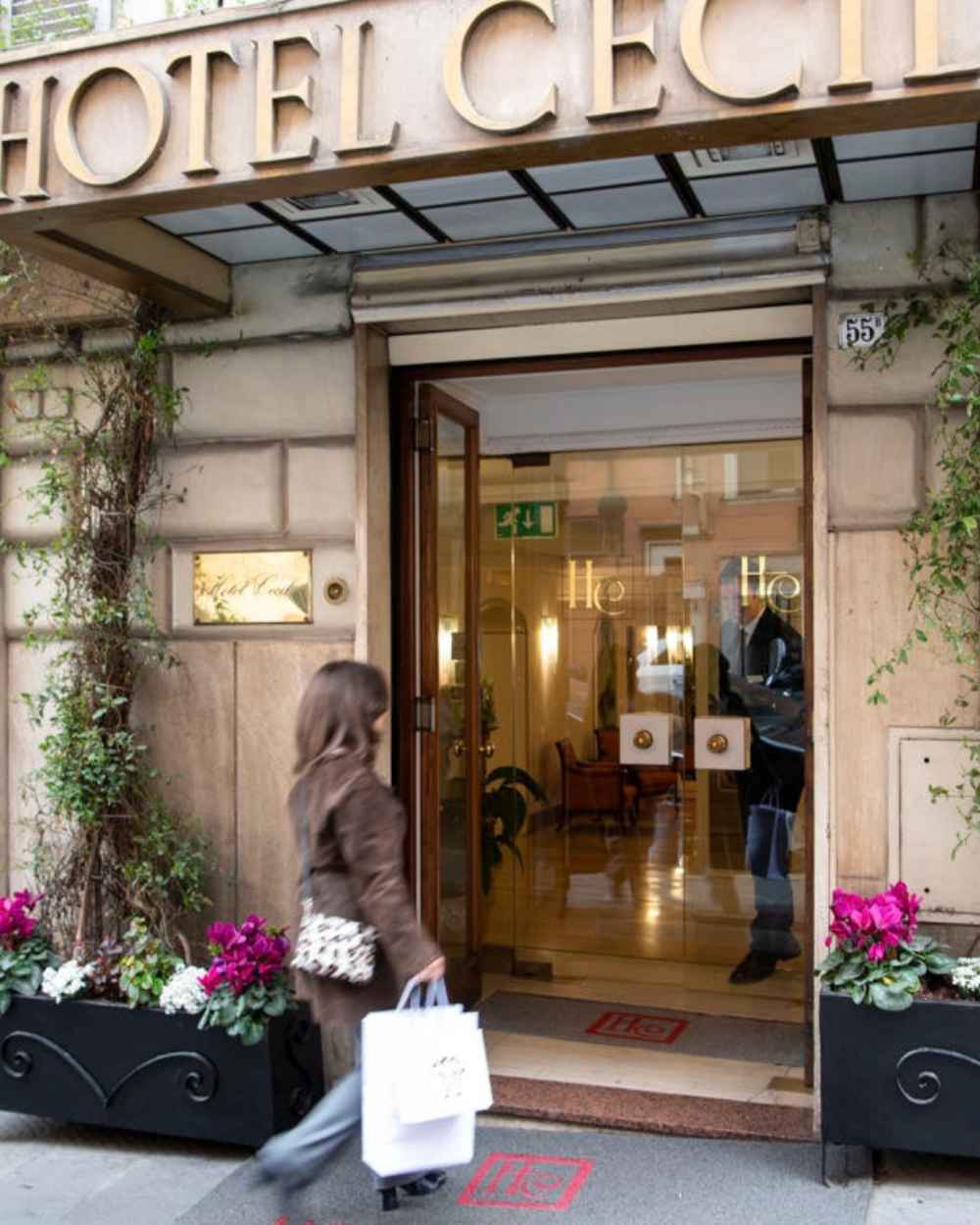
Leave the hotel, walk up Via Crispi to the junction with Via Sistina and follow it: in a few steps you are at the top of the staircase, in front of the church of Trinità dei Monti. It is the best way to first see it, because the piazza opens up suddenly below you, with the rooftops of Rome in the background. The crowds arrive from below; you arrive from above.
The staircase, unhurried
One hundred and thirty-five travertine steps, designed by Francesco De Sanctis to link the piazza with the French church on the hill. In spring it fills with azaleas, in December with lights. One thing to know: since 2019 it has been forbidden to sit on the steps, and the municipal police enforce the rule with real fines. You go up, you come down, you stand and look. That is as it should be: it is a monument, not a grandstand.
The best time is early morning, before nine, when the light is low and the only people in the piazza are Romans on their way to work. The second choice is sunset, seen from above.
The Barcaccia and Keats’s house
At the foot of the staircase is the Barcaccia, the fountain shaped like a half-sunken boat, created by Pietro Bernini with the help of his son Gian Lorenzo between 1626 and 1629. Legend has it that it recalls a boat carried here by a flood of the Tiber. The water comes from the Acqua Vergine, the same source as the Trevi Fountain, and is drinkable.
At number 26 on the piazza, right beside the steps, is the house where the poet John Keats died in 1821, aged twenty-five. Today it is the Keats-Shelley House, a small, quiet museum with a dark-wood library: half an hour well spent, especially if it is raining outside. On the other side of the staircase, Babington’s tea rooms have been there since 1893.
Around the Tridente: three streets, three characters
- Via dei Condotti is the street of the great fashion names, directly opposite the staircase. A stroll past the most beautiful shop windows in Rome.
- Via Margutta, parallel to Via del Babuino, is the artists’ street: workshops, galleries, ivy-covered courtyards. Federico Fellini lived here. It is the walk we recommend most.
- Via del Babuino leads in ten minutes to Piazza del Popolo, among antique dealers and design shops.
The finale: the Pincio at sunset
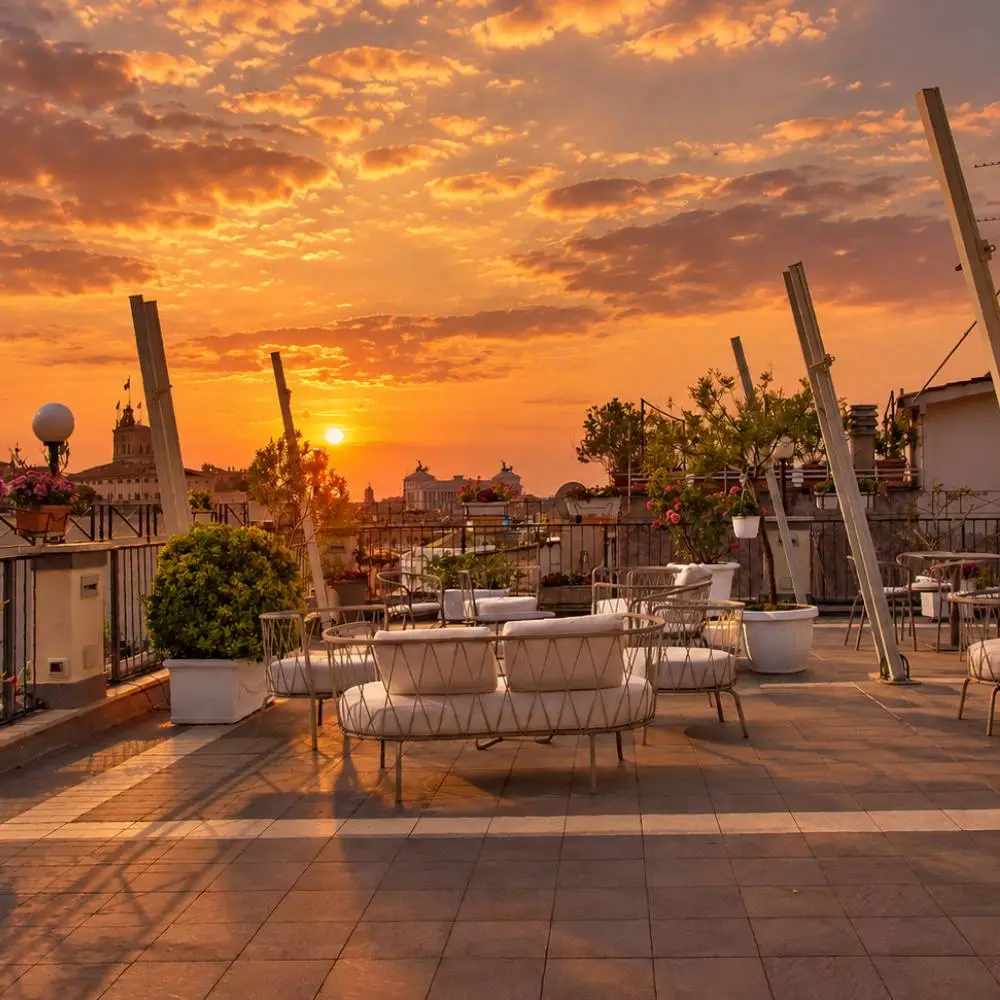
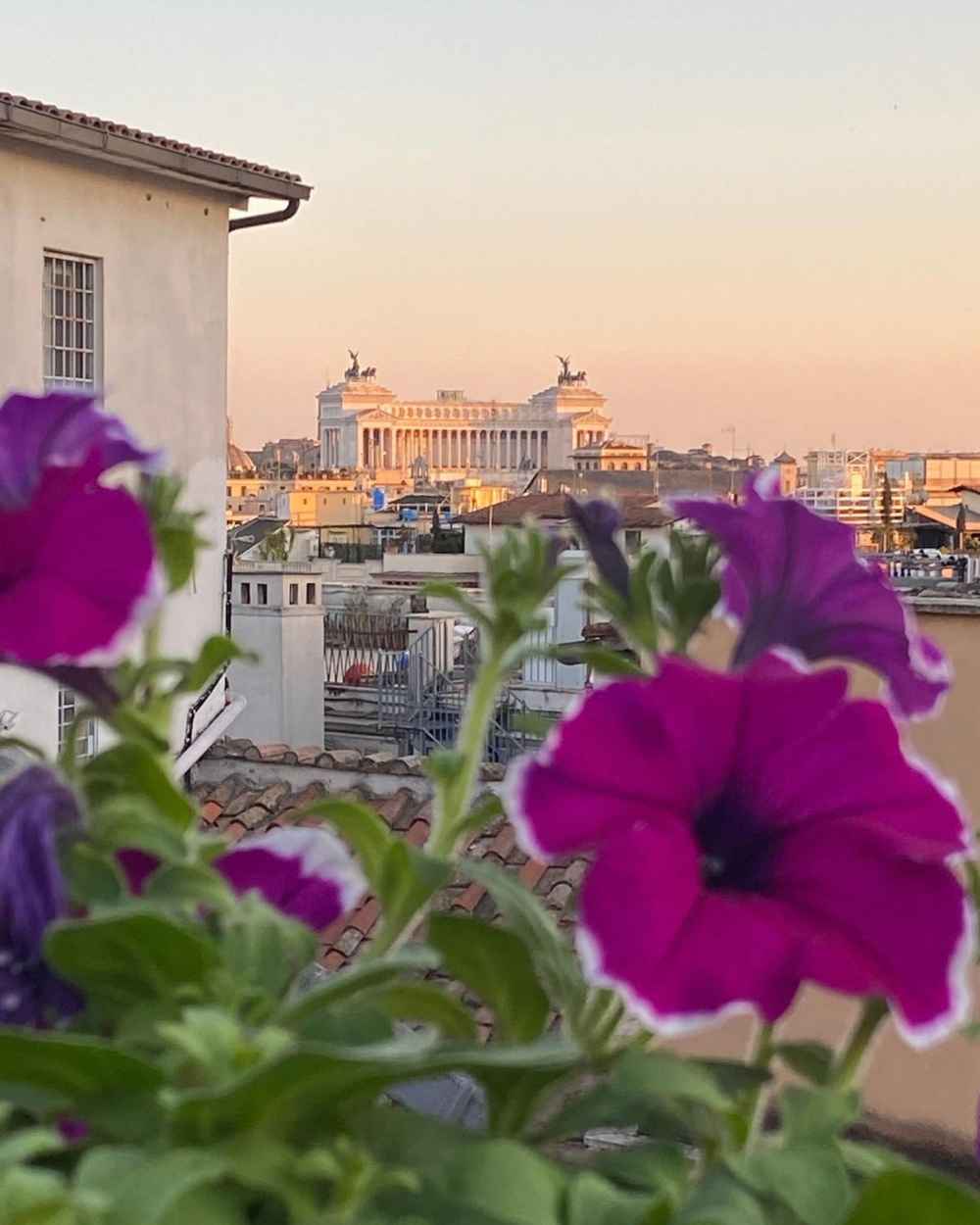
Climb back up the staircase and take Viale della Trinità dei Monti, passing Villa Medici. In ten minutes you are on the Pincio terrace, overlooking Piazza del Popolo and, in the distance, St Peter’s. It is Rome’s classic sunset. The quietest, however, is on the Cecil’s terrace, with a glass in your hand and no crowds.
At a glance
- From the Cecil: 4 minutes on foot.
- When: before 9:00 or at sunset.
- How long: an hour for the piazza, half a day with the Tridente and the Pincio.
- Remember: no sitting or eating on the steps.
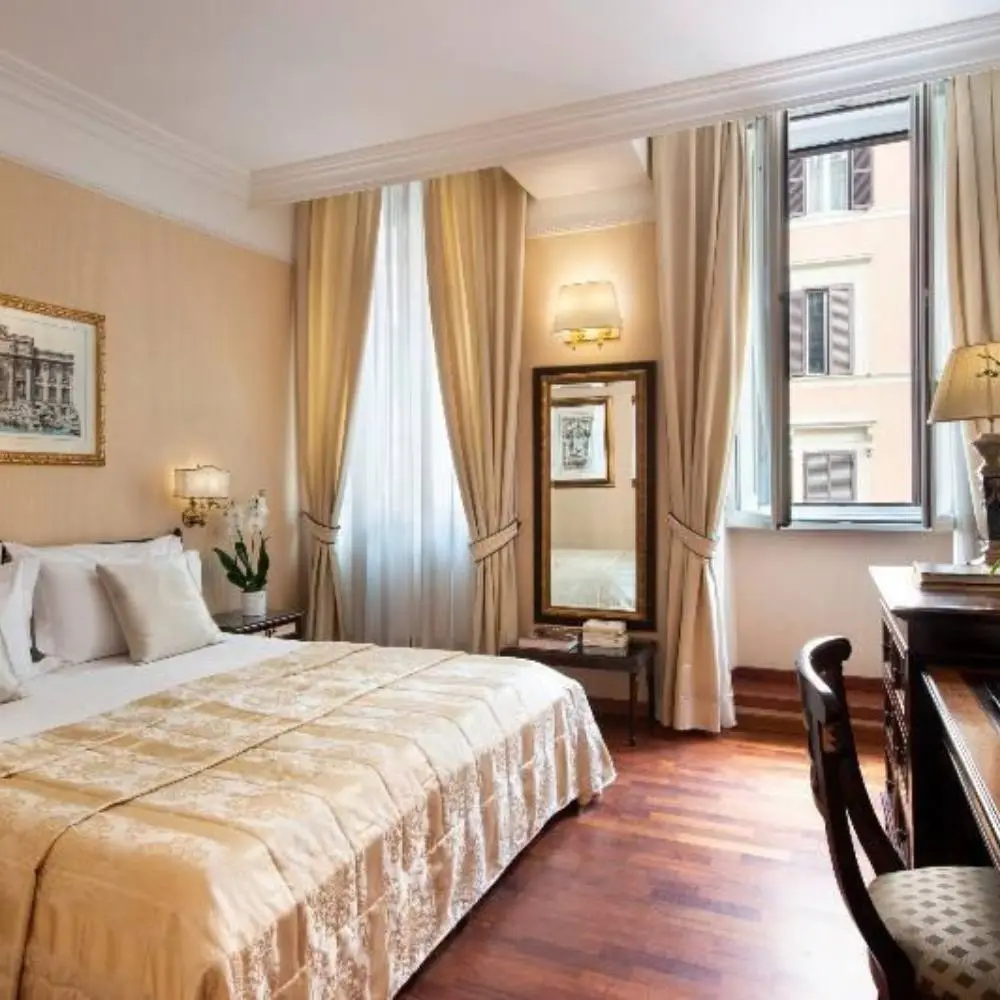
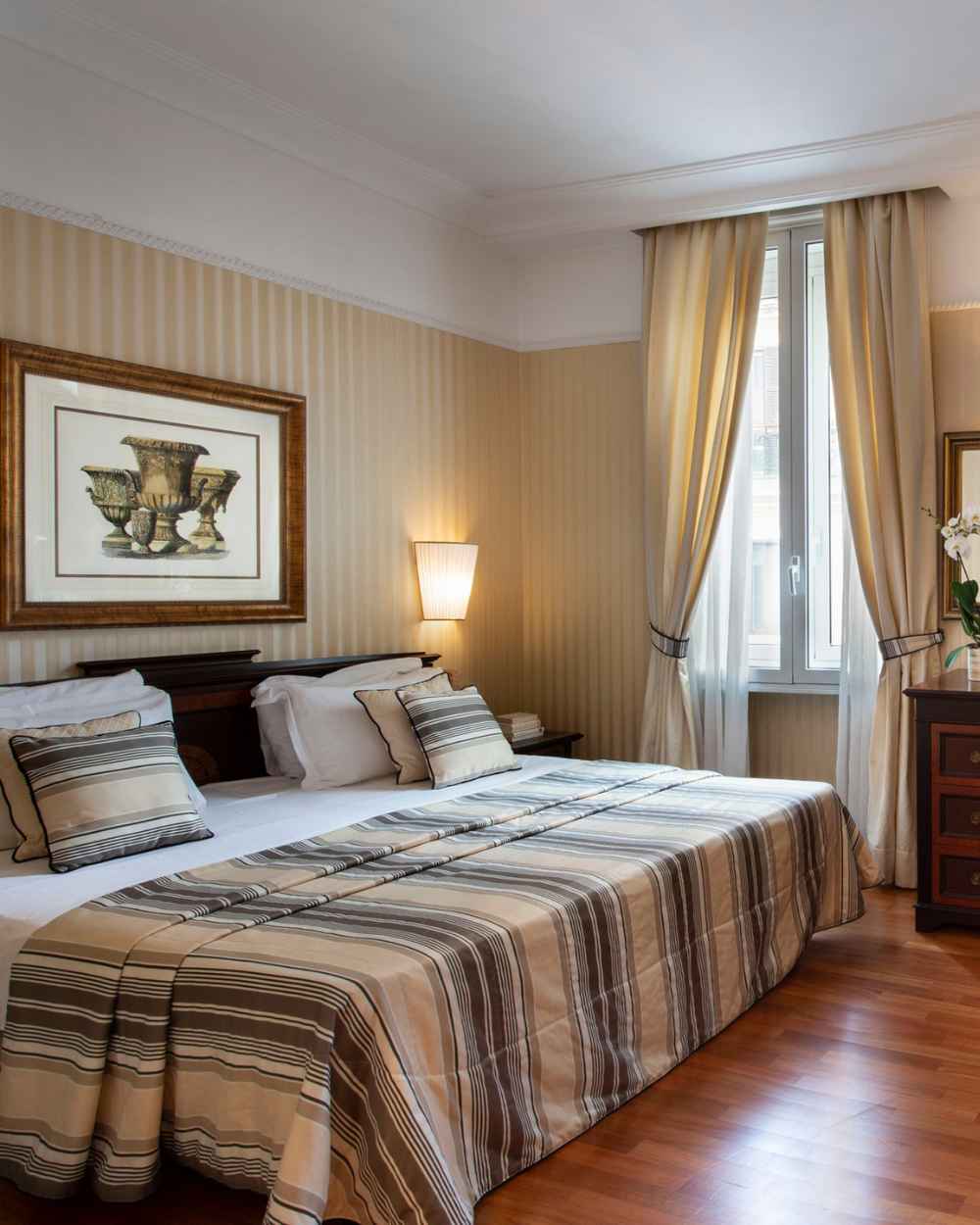
Piazza di Spagna is our neighbourhood. If you’d like it on your doorstep, take a look at our rooms.